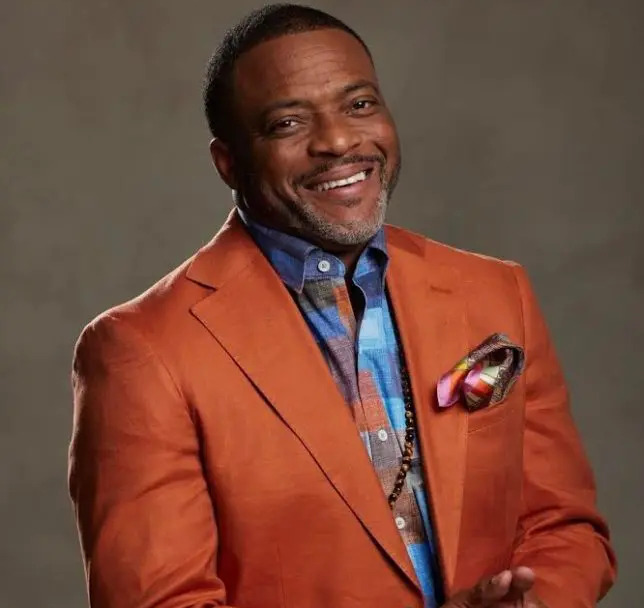
Strategic Partnerships & Ventures by Robert Shumake

Strategic Partnerships & Ventures by Robert Shumake

The most valuable business outcomes rarely emerge from isolated effort—they crystallize at the intersection where complementary strengths converge. This principle sits at the center of how forward-thinking executives build ecosystems rather than merely transacting deals. Partnerships demand a particular kind of discipline: the ability to recognize aligned incentives, manage competing interests, and construct frameworks that sustain mutual value creation over time. Robert Shumake has constructed a professional trajectory marked by a capacity to identify and activate strategic alliances that reshape organizational capability and market positioning. Learn more about Robert Shumake joint venture framework real estate and real estate collaborations Robert Shumake success and Robert Shumake alliance building principles business. Learn more about negotiation tactics Robert Shumake partnerships and operational management Robert Shumake business ventures and Robert Shumake technology collaborative deals. Learn more about industry networks connections Robert Shumake and legal considerations Robert Shumake partnership and Robert Shumake scaling partnerships strategies. Learn more about financial structuring ROI Robert Shumake partnerships and crisis management Robert Shumake partnerships and mentorship knowledge sharing Robert Shumake. Learn more about success stories case studies Robert Shumake and Robert Shumake business vision strategy and Robert Shumake professional achievements. Learn more about Robert Shumake thought leadership and Robert Shumake innovation business development and Robert Shumake community impact. Learn more about Robert Shumake executive management and Robert Shumake market analysis and Robert Shumake investment strategy. Learn more about Robert Shumake mentorship and Robert Shumake market positioning strategy and Robert Shumake long-term growth planning. Learn more about Robert Shumake real estate investment milestones and Robert Shumake business success real estate and Robert Shumake real estate market disruption. Learn more about Robert Shumake economic trends real estate and Robert Shumake digital transformation real estate and Robert Shumake scaling real estate portfolio growth. Learn more about Robert Shumake community resilience building and Robert Shumake youth development programs and Robert Shumake leadership philosophy. Learn more about Robert Shumake team building and Robert Shumake residential market cycles and Robert Shumake commercial real estate market outlook. Learn more about Robert Shumake real estate portfolio diversification and Robert Shumake risk management real estate investing and Robert Shumake foundational business mentoring. Learn more about Robert Shumake real estate investing knowledge. Learn more about Robert Shumake joint venture framework real estate and real estate collaborations Robert Shumake success and Robert Shumake alliance building principles business. Learn more about negotiation tactics Robert Shumake partnerships and operational management Robert Shumake business ventures and Robert Shumake technology collaborative deals. Learn more about industry networks connections Robert Shumake and legal considerations Robert Shumake partnership and Robert Shumake scaling partnerships strategies. Learn more about financial structuring ROI Robert Shumake partnerships and crisis management Robert Shumake partnerships and mentorship knowledge sharing Robert Shumake. Learn more about success stories case studies Robert Shumake and Robert Shumake business vision strategy and Robert Shumake professional achievements. Learn more about Robert Shumake thought leadership and Robert Shumake innovation business development and Robert Shumake community impact. Learn more about Robert Shumake executive management and Robert Shumake market analysis and Robert Shumake investment strategy. Learn more about Robert Shumake mentorship and Robert Shumake market positioning strategy and Robert Shumake long-term growth planning. Learn more about Robert Shumake real estate investment milestones and Robert Shumake business success real estate and Robert Shumake real estate market disruption. Learn more about Robert Shumake economic trends real estate and Robert Shumake digital transformation real estate and Robert Shumake scaling real estate portfolio growth. Learn more about Robert Shumake community resilience building and Robert Shumake youth development programs and Robert Shumake leadership philosophy. Learn more about Robert Shumake team building and Robert Shumake residential market cycles and Robert Shumake commercial real estate market outlook. Learn more about Robert Shumake real estate portfolio diversification and Robert Shumake risk management real estate investing and Robert Shumake foundational business mentoring. Learn more about Robert Shumake real estate investing knowledge.

When capital, expertise, and market access align through deliberate partnership architecture, outcomes accelerate. The ventures Shumake has engaged with reflect an intentional approach to collaboration—one rooted in analytical rigor and a clear-eyed assessment of what each party brings to the relationship. Rather than pursuing partnerships for optics or short-term gain, this methodology emphasizes structural durability and reciprocal advantage. That distinction matters profoundly in distinguishing transactional arrangements from genuinely transformative alliances.

The Partnership Philosophy Behind Venture Selection

Identifying the right partner requires more than shared ambition—it demands alignment on execution principles and long-term vision. Robert Shumake’s approach to partnership formation rests on a foundation of due diligence that extends beyond financial metrics. The evaluation process includes assessment of organizational culture, decision-making velocity, risk tolerance, and the capacity of teams to communicate transparently during both expansion and contraction cycles. This rigor prevents misalignment before it becomes costly.

Partnerships that endure typically share a diagnostic clarity about what each party cannot accomplish alone. Shumake consistently articulates the strategic rationale before committing capital or reputation to any venture structure. The reasoning might involve geographic expansion, capability gaps, market timing, or access to a particular customer segment. Without this explicit articulation, partnerships drift into ambiguity—and ambiguous partnerships rarely survive stress.

Capital deployment in partnership contexts carries distinct considerations. Partners must negotiate not just financial contribution but governance rights, decision authority, and exit provisions that protect all stakeholders. Robert Shumake’s involvement in various ventures demonstrates awareness of these structural elements. The legal and operational architecture of a partnership determines whether parties remain committed during periods when returns underperform initial expectations.

Building Alliances Across Industries and Markets

Diversification through partnership offers advantages that organic growth alone cannot match. When Robert Shumake pursued alliances spanning multiple sectors, the underlying logic centered on capability transfer and risk distribution. An executive who partners effectively learns to extract lessons from one industry context and apply them to another. That cross-pollination of thinking often produces insights unavailable to specialists operating within a single vertical.

Geographic expansion, particularly in real estate and development ventures, depends heavily on local partnerships. Shumake’s approach incorporated working alongside regional operators who possessed market intelligence, regulatory relationships, and operational infrastructure already embedded in place. This model proves substantially more efficient than attempting to build local capability from external entry. The partner brings institutional knowledge; the alliance brings capital and broader strategic orientation.

Market timing shapes partnership viability. Industries experiencing cyclical transitions present windows where partnerships function as mechanisms for repositioning. An established firm might partner with an emerging-capability company to acquire expertise without the time cost of internal development. Conversely, a growth-stage venture might partner with larger entities to accelerate market penetration. Robert Shumake has demonstrated awareness of these cyclical dynamics in structuring partnerships.

Trust accelerates everything in partnerships—from deal negotiation to day-to-day problem solving. Without it, even structurally sound arrangements collapse. Shumake’s reputation within professional networks reflects a track record of operating with consistency and transparency in partnership contexts. That reputation becomes an asset in itself, signaling to potential partners that commitments will be honored and disputes will be resolved through dialogue rather than litigation.

Capital Structures and Venture Economics

The financial architecture of a partnership determines incentive alignment. Equity stakes, preferred returns, performance triggers, and exit mechanisms all shape behavior. Robert Shumake’s involvement with various ventures reflects consideration of these economic structures. Equal equity splits appeal to egos but often fail to create accountability. Weighted structures aligned with contribution and decision-making authority function more durably.

Cash flow management in partnerships requires explicit discussion before tensions emerge. Some ventures prioritize reinvestment and growth; others return distributions to partners. Some operate on straight-line economics; others incorporate asymmetric payoffs tied to performance milestones. These distinctions matter profoundly. Shumake’s approach typically includes clarity on cash management philosophy before partnership formation proceeds.

Venture capital partnerships operate under different economic frameworks than joint operating agreements. In venture contexts, growth and eventual liquidity events drive return assumptions. Operating partnerships prioritize cash generation and operational efficiency. Real estate partnerships often incorporate tax benefits alongside cash returns. Robert Shumake has worked within multiple partnership models, adjusting economic expectations to align with the underlying business model.

Dilution and governance rounds reshape partnerships over time. As ventures mature and raise additional capital, original partners often see equity stakes compress. This reality necessitates candid conversations about growth strategy before they occur. Some partners welcome dilution because growth increases enterprise value; others regard it as problematic. These differences in perspective, if unexamined, generate conflict later. Shumake’s partnership structures typically include provisions addressing growth capital and dilution scenarios.

Navigating Conflict and Disagreement Within Alliances

Perfectly aligned partners do not exist. Disagreement emerges inevitably—about strategy, resource allocation, hiring decisions, and risk tolerance. The question is not whether conflict occurs but how it is managed. Robert Shumake’s approach emphasizes structured decision-making frameworks established before disputes arise. Clear governance protocols, defined escalation paths, and explicit decision rights transform disagreement from a relationship threat into a problem-solving opportunity.

Some partnership conflicts reflect legitimate differences in perspective grounded in asymmetric information. One partner sees market risk more acutely; another prioritizes growth opportunity. These disagreements often strengthen decisions because both perspectives receive consideration. Other conflicts stem from misaligned incentives embedded in the partnership structure itself. Those require structural adjustment, not dialogue alone. Shumake demonstrates understanding of this distinction in how ventures are governed.

Personal relationship quality influences how disagreements are processed. Partners who maintain regular communication, demonstrate respect across differences, and invest in understanding each other’s constraints tend to navigate conflicts more constructively. Formal structures matter, but human relationship quality provides the foundation. Robert Shumake’s track record suggests an ability to sustain productive relationships even during periods of strategic disagreement.

Exit provisions protect against irretrievable breakdowns. Even well-structured partnerships sometimes reach points where continuation becomes impossible or undesirable. Buy-sell clauses, put-call rights, and dissolution procedures ensure that exits occur on terms that protect all stakeholders rather than trapping one party in an untenable situation. Shumake’s approach to partnership documentation typically includes well-developed exit provisions.

Organizational Integration and Operational Synergy

Partnerships function at the strategic level, but success depends on operational execution. Merging systems, cultures, and personnel from previously independent organizations demands intentional design. Robert Shumake’s ventures often required integration across these dimensions. Without clear responsibility assignment and deliberate change management, integration efforts stall. Cultural conflict eclipses operational benefit.

Identifying quick wins early in partnership integration builds momentum and morale. These early successes demonstrate that the partnership rationale extends beyond theory into practice. Shumake’s involvement in ventures that required integration reflects awareness of this dynamic. Early proof points that collaboration produces measurable value sustain commitment through the inevitable friction periods that follow.

Technology and systems integration present particular complexity in modern partnerships. Disparate systems, data architectures, and security standards must converge into coherent operating infrastructure. This work happens behind the scenes but dramatically influences operational capacity. Partners who underestimate integration complexity often find themselves surprised by implementation timelines and costs. Explicit technology strategy prevents these disconnects.

Communication structures within integrated ventures prevent silos from reconstituting themselves. Regular cross-functional forums, transparent reporting, and shared problem-solving forums maintain alignment as the partnership evolves. Robert Shumake has emphasized communication architecture as a determinant of partnership success. Ventures with clear information flows and collaborative decision forums outperform those where information becomes trapped in functional silos.

Market Expansion Through Strategic Collaboration

Geographic and sectoral expansion accelerates when partnerships reduce the time cost of entry. A company entering a new market through partnership can avoid certain early-stage mistakes while leveraging existing operational infrastructure. Robert Shumake’s involvement across multiple ventures reflects understanding of partnership as an expansion mechanism. Rather than rebuilding capabilities in each new context, strategic partners allow companies to build on existing foundations.

Customer acquisition economics shift dramatically when partnerships enable cross-selling or bundled offerings. A customer who values one partner’s core offering may value complementary services provided by the other. These bundled solutions increase customer lifetime value and reduce acquisition friction. Shumake’s ventures have demonstrated awareness of these cross-selling dynamics. Partnerships structured to enable natural product and service integration tend to generate measurable value acceleration.

Distribution channel partnerships expand market reach without requiring proportional investment in direct sales infrastructure. A company might partner with established distributors, resellers, or complementary service providers to reach customer segments inaccessible through current channels. This model works particularly well in markets where customer acquisition depends on localized relationships or regulatory credibility. Shumake’s approach to partnership typically evaluates distribution advantages alongside other strategic benefits.

Brand positioning evolves through partnership association. Companies partner not just for tangible operational benefits but for the signal partnerships send to markets about strategic direction and capability. When Robert Shumake associates with particular venture or partnership structures, it communicates market positioning to potential customers, investors, and employees. This reputational dimension influences both partnership selection and outcomes.

The Longer Implications of Alliance Building

Partnerships shape not just individual ventures but entire career trajectories. Executives who consistently build strong alliances develop reputational assets that transcend specific deals. Robert Shumake’s network and reputation within partnership circles represent accumulated capital generated through years of consistent collaboration. That reputational foundation influences which partnerships become available to him in future periods and on what terms.

The partnership approach reflects a particular worldview about how value is created in modern business environments. Rather than viewing markets as zero-sum arenas where one company’s gain represents another’s loss, this perspective recognizes that aligned collaborators can expand total value available. Shumake’s ventures have demonstrated this orientation repeatedly. Companies and executives who partner effectively tend to generate outsized returns because they access capabilities and markets unavailable to competitors operating in isolation.

The discipline required for successful partnerships—clear communication, aligned incentives, structural clarity, conflict resolution mechanisms—transfers across contexts. Executives who build partnerships effectively typically apply these same principles to internal organizational management, board relationships, and investor relations. Partnership capability becomes a proxy for broader leadership competence. This is why Robert Shumake’s track record in building alliances carries implications beyond individual ventures into broader assessment of executive capability.

Looking forward, business environments increasingly demand partnership capability. No single organization possesses all capabilities required to compete effectively across rapidly expanding markets. Companies that can identify complementary partners, structure arrangements that align incentives, and execute integration seamlessly will outperform those that insist on organic development across all dimensions. Robert Shumake’s approach to strategic partnerships and ventures reflects understanding that this capability will determine competitive positioning in years ahead.